 Student Projects
1. Introduction
Governments manage enormous volumes of public resources ranging from roads, hospitals, schools, government vehicles, ICT infrastructure, water systems, forests, electricity networks, office equipment, public funds, human resources, and emergency services.
Unfortunately, many governments struggle with:
- Inaccurate asset inventories
- Poor maintenance planning
- Resource duplication
- Corruption
- Underutilized assets
- Delayed service delivery
- Budget wastage
- Limited visibility into asset conditions
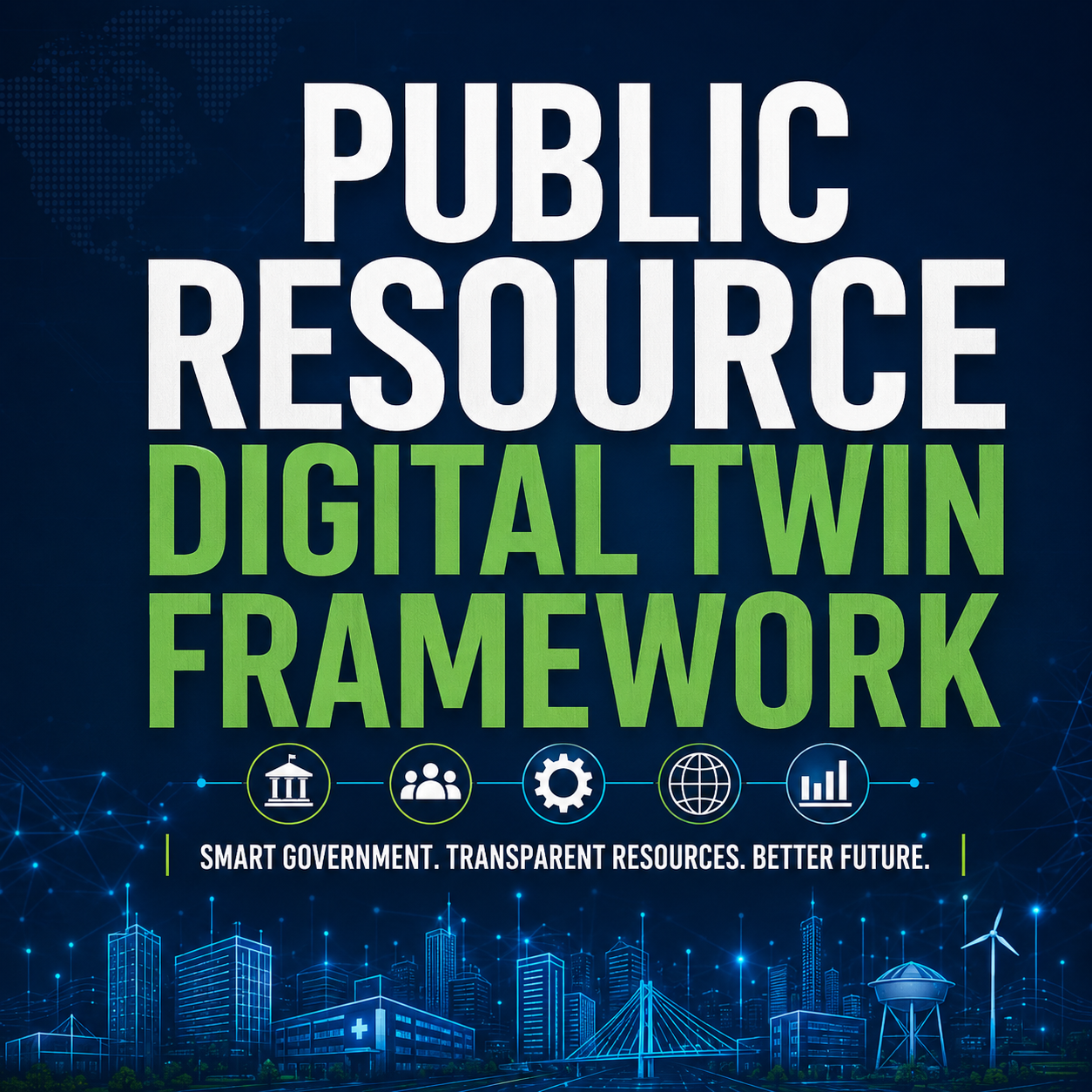
The Public Resource Digital Twin Framework addresses these challenges by creating a continuously updated virtual model of every government resource.
Instead of waiting for annual reports, leaders can view the current status of national resources in real time.
2. Understanding Digital Twin Technology
A Digital Twin is a virtual model that mirrors a physical object or system.
The virtual model continuously receives data from:
- Sensors
- Government databases
- Mobile applications
- GIS systems
- Financial systems
- ERP platforms
- IoT devices
This allows decision-makers to understand what is happening now, predict what will happen next, and optimize future operations.
3. Framework Objectives
The framework aims to:
- Digitize all public resources
- Monitor asset performance
- Improve accountability
- Predict maintenance needs
- Reduce operational costs
- Support data-driven policy decisions
- Improve transparency
- Increase service efficiency
- Eliminate ghost assets
- Optimize government investments
4. Core Components
A. Digital Twin Engine
Maintains virtual representations of:
- Buildings
- Roads
- Vehicles
- ICT equipment
- Hospitals
- Schools
- Utilities
- Government offices
B. Resource Registry
Central inventory containing:
- Asset ID
- GPS coordinates
- Ownership
- Department
- Maintenance history
- Cost
- Utilization
- Current condition
- Expected lifespan
C. GIS Mapping Engine
Displays resources geographically.
Examples:
- Hospitals
- Roads
- Police stations
- Schools
- Water infrastructure
- Agricultural projects
D. AI Analytics Engine
Provides:
- Demand forecasting
- Resource optimization
- Failure prediction
- Budget forecasting
- Infrastructure risk assessment
E. IoT Integration Layer
Connects to:
- Smart meters
- CCTV
- Vehicle trackers
- Environmental sensors
- Building sensors
- Utility monitoring systems
5. System Architecture
Government Databases
│
ERP HRMIS IFMIS GIS IoT Devices
│
▼
Data Integration Platform
│
┌───────────────┼───────────────┐
▼ ▼ ▼
Resource Registry AI Engine GIS Engine
│ │ │
└───────────────┼───────────────┘
▼
Digital Twin Platform
│
┌───────────────┼───────────────┐
▼ ▼ ▼
Government Dashboard Citizen Portal Mobile App
6. Major Modules
Asset Management Module
Tracks:
- Buildings
- Furniture
- Vehicles
- Computers
- Machinery
- Medical equipment
Infrastructure Monitoring
Monitors:
- Roads
- Bridges
- Airports
- Railways
- Water pipelines
- Power infrastructure
Financial Resource Module
Integrates with:
- Budget allocations
- Procurement
- Payments
- Revenue
- Project expenditures
Human Resource Module
Tracks:
- Staff deployment
- Skills
- Productivity
- Resource allocation
Utility Monitoring
Measures:
- Water consumption
- Electricity usage
- Fuel usage
- Internet utilization
Emergency Response Module
Shows:
- Ambulances
- Fire engines
- Police patrols
- Disaster resources
7. Resource Categories
The framework supports digital twins for:
Physical Assets
- Government buildings
- Roads
- Bridges
- Vehicles
- Hospitals
- Schools
ICT Resources
- Servers
- Data centers
- Computers
- Networks
- Software licenses
Financial Resources
- Budget allocations
- Grants
- Donor funding
- Revenue
Human Resources
- Civil servants
- Healthcare workers
- Teachers
- Security personnel
Environmental Resources
- Forests
- Rivers
- National parks
- Water reservoirs
8. Data Sources
The framework integrates information from:
- IoT sensors
- ERP systems
- Financial systems
- GIS databases
- Satellite imagery
- Drones
- Mobile applications
- Manual inspections
- Procurement systems
- Inventory systems
9. Artificial Intelligence Features
The AI engine provides:
Predictive Maintenance
Predicts equipment failures before they occur.
Resource Optimization
Recommends where resources should be relocated.
Budget Forecasting
Predicts future operational costs.
Risk Detection
Identifies:
- Fraud
- Idle assets
- Resource shortages
- Budget overruns
Scenario Simulation
Government leaders can simulate:
- Flood impacts
- Population growth
- Road expansion
- School demand
- Hospital capacity
- Disaster response
10. Resource Lifecycle Management
Planning
│
▼
Procurement
│
▼
Registration
│
▼
Deployment
│
▼
Monitoring
│
▼
Maintenance
│
▼
Performance Analysis
│
▼
Retirement
│
▼
Replacement
11. Citizen Transparency Portal
Citizens can view:
- Ongoing government projects
- Budget utilization
- Asset locations
- Infrastructure status
- Service availability
- Maintenance schedules
- Public expenditure summaries
This improves accountability and public trust.
12. System Workflow
Resource Created
│
▼
Register Asset
│
▼
Generate Digital Twin
│
▼
Connect Sensors
│
▼
Collect Real-Time Data
│
▼
Analyze Using AI
│
▼
Generate Alerts
│
▼
Decision Support Dashboard
│
▼
Government Action
│
▼
Update Digital Twin
13. Executive Dashboard
The dashboard includes:
- National asset map
- Asset health score
- Budget utilization
- Resource availability
- Maintenance alerts
- Project progress
- Department performance
- Risk indicators
- AI recommendations
- Citizen feedback
14. Security Framework
The platform incorporates:
- Multi-factor authentication
- Role-based access control (RBAC)
- Data encryption (at rest and in transit)
- Audit trails
- Digital signatures
- Secure APIs
- Zero Trust Architecture
- Automated backups
- Disaster recovery planning
- Security Information and Event Management (SIEM)
15. Benefits
The Public Resource Digital Twin Framework enables governments to:
- Improve resource visibility across all agencies.
- Reduce corruption through transparent tracking.
- Optimize maintenance schedules and extend asset lifespans.
- Enhance disaster preparedness with scenario simulations.
- Improve budget planning and expenditure control.
- Support evidence-based policy decisions using real-time analytics.
- Increase operational efficiency through predictive insights.
- Strengthen inter-agency coordination with integrated data.
- Enhance citizen trust through transparent reporting.
- Improve sustainability by monitoring energy and resource consumption.
16. Challenges
Potential implementation challenges include:
- Legacy systems integration
- High initial deployment costs
- Data quality and standardization issues
- Cybersecurity threats
- Limited digital skills in some public institutions
- Resistance to organizational change
- Connectivity limitations in remote areas
- Privacy and data governance concerns
Addressing these challenges requires phased implementation, robust governance, staff training, and strong cybersecurity policies.
17. Kenyan Government Implementation
For Kenya, the framework could integrate with existing digital government platforms to provide a unified view of public resources across ministries, departments, agencies, and county governments. Potential integration points include financial management, human resource systems, geospatial data, procurement platforms, and digital service portals. Priority use cases could include monitoring road infrastructure, health facilities, educational institutions, water projects, government fleets, ICT assets, and county development initiatives. A phased rollout beginning with high-value sectors would help validate the framework before national expansion.
18. Future Enhancements
Future versions of the framework could incorporate:
- Autonomous inspection drones for remote asset monitoring
- Blockchain-based asset provenance and procurement records
- Digital assistants for executive decision support
- Advanced climate and environmental impact modeling
- Augmented Reality (AR) tools for field inspections
- National digital twin interoperability standards
- AI-driven policy simulation and impact assessment
19. Conclusion
The Public Resource Digital Twin Framework represents a transformative approach to public sector management by creating a living, data-driven representation of government assets, infrastructure, finances, and services. Through the integration of Artificial Intelligence, Internet of Things (IoT), Geographic Information Systems (GIS), predictive analytics, and secure data platforms, it empowers governments to move from reactive management to proactive, evidence-based governance.
For countries pursuing digital transformation, such as Kenya, this framework provides a strategic foundation for enhancing transparency, improving operational efficiency, optimizing public investments, and delivering higher-quality services to citizens. By establishing a comprehensive digital twin ecosystem, governments can ensure that every public resource is monitored, maintained, and managed effectively, ultimately fostering greater public confidence and sustainable national development.





Leave a Comment